
CI/CD and reliability
Can you actually roll back this release?
The deployment job is green. The application started, the health check passed, and the release is marked successful. Then someone tries to place an order.
Consider that a hypothetical release where checkout fails even though the application is running. The deployment system has completed every step you gave it. The missing step was checking whether a customer could still do the thing the business needed.
I'd want the release process to answer two questions before calling that deployment finished: how will you know the important behavior still works, and what will you do if it doesn't?
Decide what success looks like before releasing
A process health check is useful. Keep it. Then choose a small number of checks tied to the service's purpose. For a store, that could include completing a controlled test checkout. For an internal application, it might be signing in and saving a record. A background service may need evidence that work is actually leaving the queue.
Those checks need safe test data and a defined cleanup process. A production checkout test shouldn't accidentally charge a real customer or send an order to fulfillment. When a complete production test isn't practical, be explicit about what the available checks prove and what they leave uncertain.
I'd also decide who watches the release and what would make them stop it. “Keep an eye on the dashboard” leaves too much interpretation for the moment something goes wrong. Agree on the relevant signals and an observation period that fits the workload. A nightly process won't demonstrate its health during a five-minute afternoon check.
The previous version needs to work with today's data
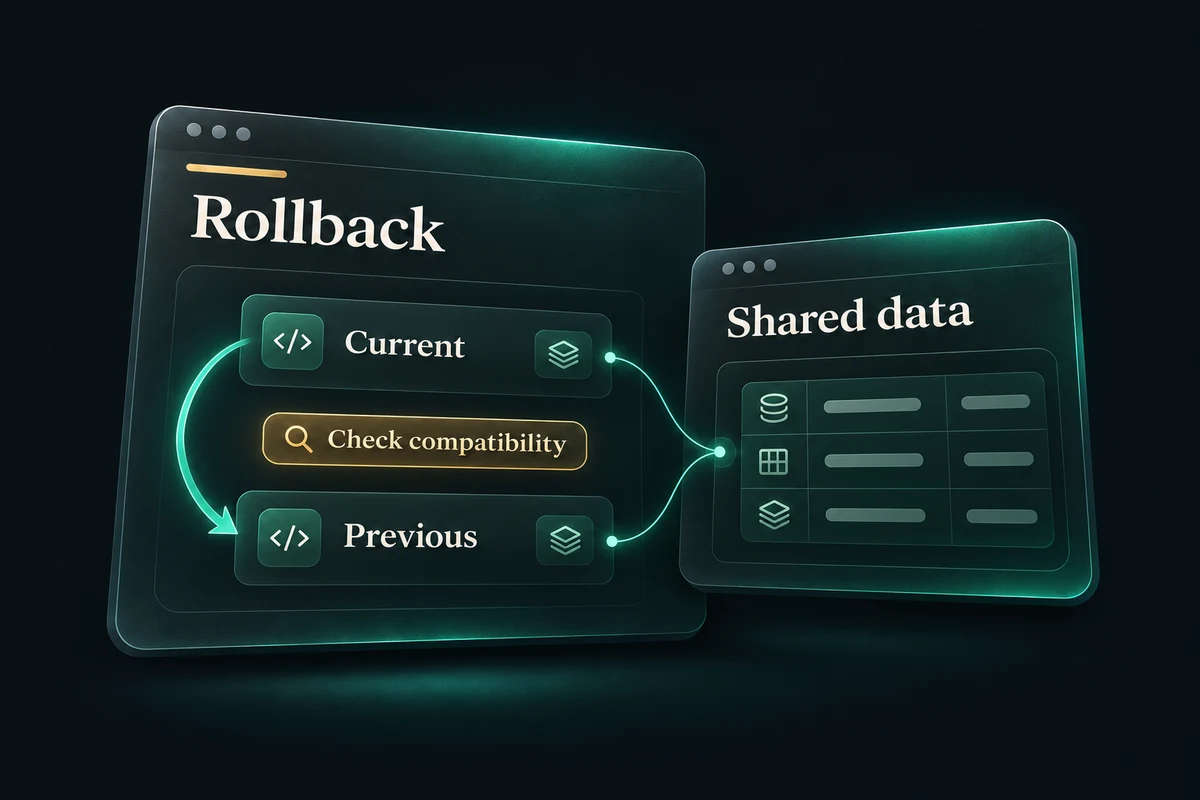
Keeping the previous build is necessary for many rollback plans. It doesn't establish that the old code can safely run after the new code has changed the environment.
For a hypothetical example, imagine a release that starts writing a new order status. The previous version doesn't recognize that value. Redeploying the previous build restores the old code, but it leaves the new orders in the database. Whether rollback works now depends on how that code handles those records.
Amazon's engineering guidance describes this broader compatibility problem: software versions need to understand the data and messages they may encounter during both forward and backward transitions. It's worth testing the transition itself, beyond testing each version in isolation. Ensuring rollback safety during deployments
Database changes need particular care. AWS's blue/green guidance recommends separating schema changes from application changes and preserving compatibility between the versions that may need to run. Removing a field that the previous version still requires closes off that rollback path. AWS guidance on schema changes
I'd make that limitation visible in the release plan. If returning to the old version is unsafe, the response may be disabling the affected feature or applying a tested correction. The team should know that before an incident turns “just roll it back” into an experiment.
Rehearse the part you hope to skip
For a routine application release, I'd want the recovery notes to identify the previous deployable artifact, the configuration it needs, the person who can initiate recovery and the checks that confirm the service is working afterward. Any migration or external dependency that changes those steps belongs in the same notes.
Try the procedure in a representative test environment. Release the new version, exercise it enough to create relevant state, then attempt the planned recovery and verify the important workflows. A rehearsal with an empty database can miss the exact compatibility issue you're trying to find.
Recovery also needs to account for work already completed. Reverting application code doesn't unsend an email or undo a payment. Those effects may need reconciliation, and restoring an older database can discard legitimate activity that happened after the restore point. I wouldn't treat a database restore as a routine extension of an application rollback.
A small service may need only a retained build, a reliable deployment command and a few well-chosen checks. A busy transactional application may justify a gradual rollout and more extensive recovery testing. The effort should reflect the cost of failure and the complexity of the state you have to preserve.
Before the next release, ask the person responsible to walk through recovery using the instructions as written. Anything that requires “you just have to know” is something you can fix while the service is healthy.